There’s a board for every surfer who’s ever wanted to move through a wave without forcing it.
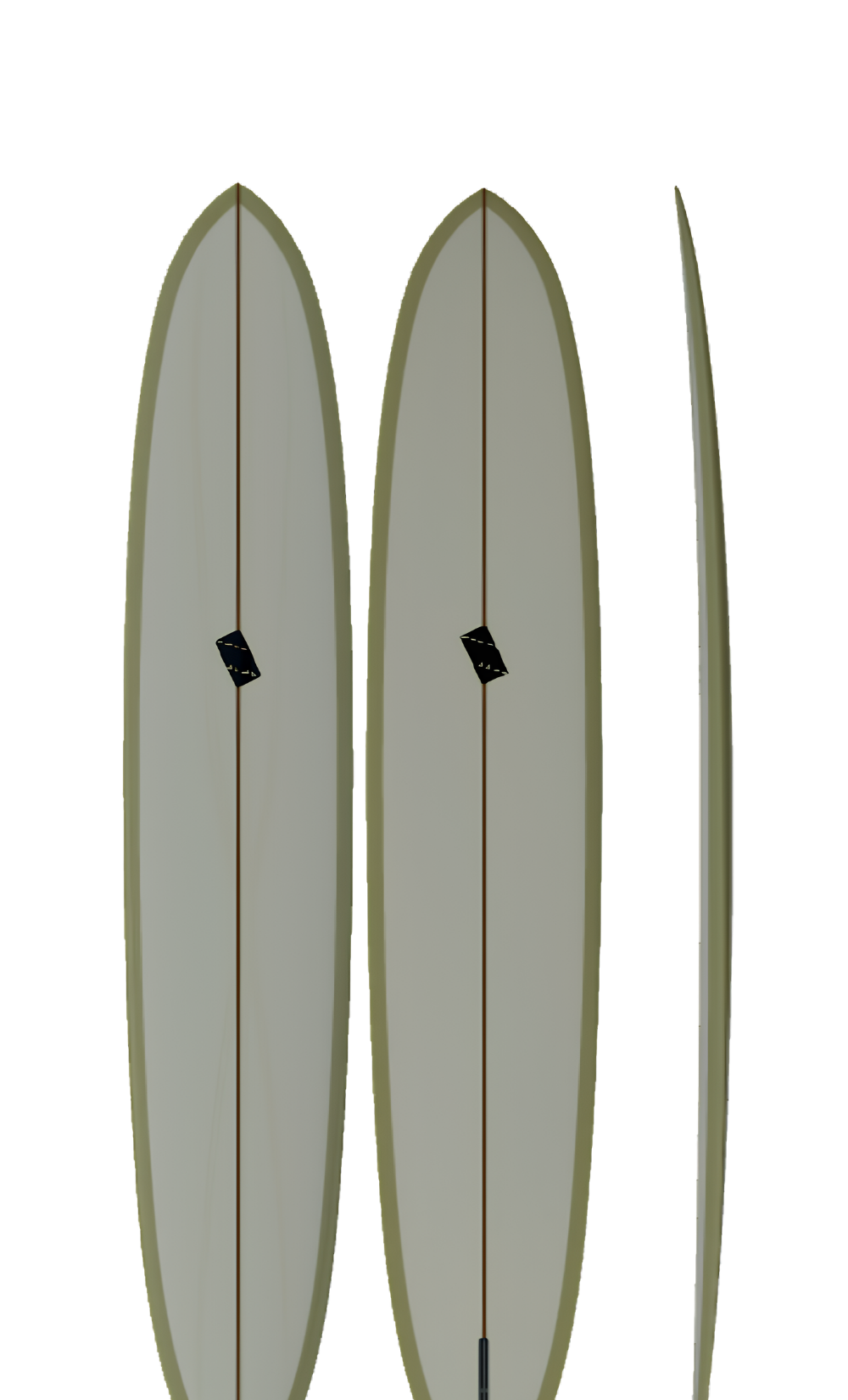
The Passage is big. Long. Pulled in at both the nose and tail, generally a pintail, built to sit in the water with presence and weight. It’s not a hot rod. You won’t be dropping your knee into hard turns or threading through sections with sudden movements. The Passage doesn’t ask for that kind of energy.
Instead, it asks you to slow down and read.
The board is rooted in respect for how surfboards used to work — those big Hawaiian balsa boards that riders just stood on and moved, carrying momentum across what felt like forever. The Passage is a modern take on that philosophy, faster and more refined, built with contemporary rails and foam and technology. But the core idea is the same: you’re not attacking the wave. You’re not trying to earn points through flashy maneuvers. You’re learning what the wave actually wants to do, and you’re moving with it.
Here’s what makes the Passage special: it’s fast enough to connect sections of a wave that wouldn’t normally link. On a smaller board, those disparate parts stay separate. But on the Passage, with all that length and speed, the wave reveals a continuity you didn’t know was there. You move from one section to the next not because you forced it, but because you had the momentum to show the ocean what it was always trying to do.
It’s built for long point breaks — the kind of waves where time slows down and the ocean has room to show you everything.
The Passage isn’t about doing more. It’s about seeing more.
Best suited for: long point breaks, surfers who want to slow their approach and read the wave, riders seeking flow over performance
Known for: length and presence, speed through connected sections, simplified surfing philosophy